
The Sonoran is not a featureless wasteland. That's the first thing to unlearn. It is one of the most biodiverse deserts on earth — over 2,000 plant species, 550 vertebrate species, and more than 100 species of reptile. What it lacks is forgiveness. The same conditions that produce extraordinary diversity also produce extraordinary danger for anyone who arrives unprepared or underprepared. This guide is about the latter.
Water: How Much, Where to Find It, How to Carry It
The number is 4 litres per person per day in summer heat. Not 2 litres. Not "more than usual." Four litres, minimum, and that assumes you are not doing strenuous activity in peak afternoon heat. If you are hiking in July, in direct sun, between 10 a.m. and 4 p.m., you can lose a litre of water per hour through sweat. Your body will not register thirst until you are already mildly dehydrated. Drink before you feel the need.
Natural water sources in the Sonoran are scarce, seasonal, and often contaminated with animal waste. Tinajas — natural rock basins that collect rainwater — exist but cannot be relied upon. Carry all the water you need for your planned distance plus a 25% emergency reserve. A 3L hydration bladder plus a 1L hard-sided bottle gives you redundancy if one system fails.
Electrolytes matter as much as water volume. Hyponatremia — low sodium from drinking too much plain water without replacing electrolytes — is a real risk on long desert days. Carry electrolyte tabs or powder and use them whenever you're drinking heavily.
Heat Management
Dawn start. Every experienced desert hiker says this and most beginners ignore it until they've made the mistake once. In summer, temperatures in the Sonoran reach 40°C or above by 10 a.m. If you start hiking at 6 a.m., you can cover 10–15 km in comfortable temperatures before the heat becomes a management problem. If you start at 9 a.m., you will be in danger before you've gone anywhere.
The midday rest protocol — finding shade and stopping between roughly 10 a.m. and 3 p.m. — is not laziness. It is how desert-adapted cultures have survived in these environments for thousands of years. A sun hoody with UPF 50+ coverage is more effective than sunscreen alone, covers more surface area, and doesn't wash off in sweat. A wide-brim hat is not optional — your neck and ears are high-risk burn areas that most people neglect.
Navigation in Featureless Terrain
The Sonoran is not actually featureless, but it can feel that way when you're in it and disoriented. The saguaro-studded flats in particular have a rhythm that can trick you into thinking you've passed a landmark when you haven't. Carry a map and compass in addition to your phone or GPS — batteries and signals fail. Learn to take a bearing before you need to.
"In the desert, what you leave behind matters more than what you bring. Weight is time, and time is water."
Know your landmarks before you leave the trailhead. Identify two or three distant features (a distinctive peak, a ridgeline, a water tower if present) and keep them in your peripheral awareness. If you lose the trail in the scrub, stop and orient before moving further. Moving in circles uses water and generates heat. Neither is acceptable.
Wildlife Awareness
The Sonoran's wildlife will generally avoid you if you avoid surprising them. Specific protocols:
Night Desert
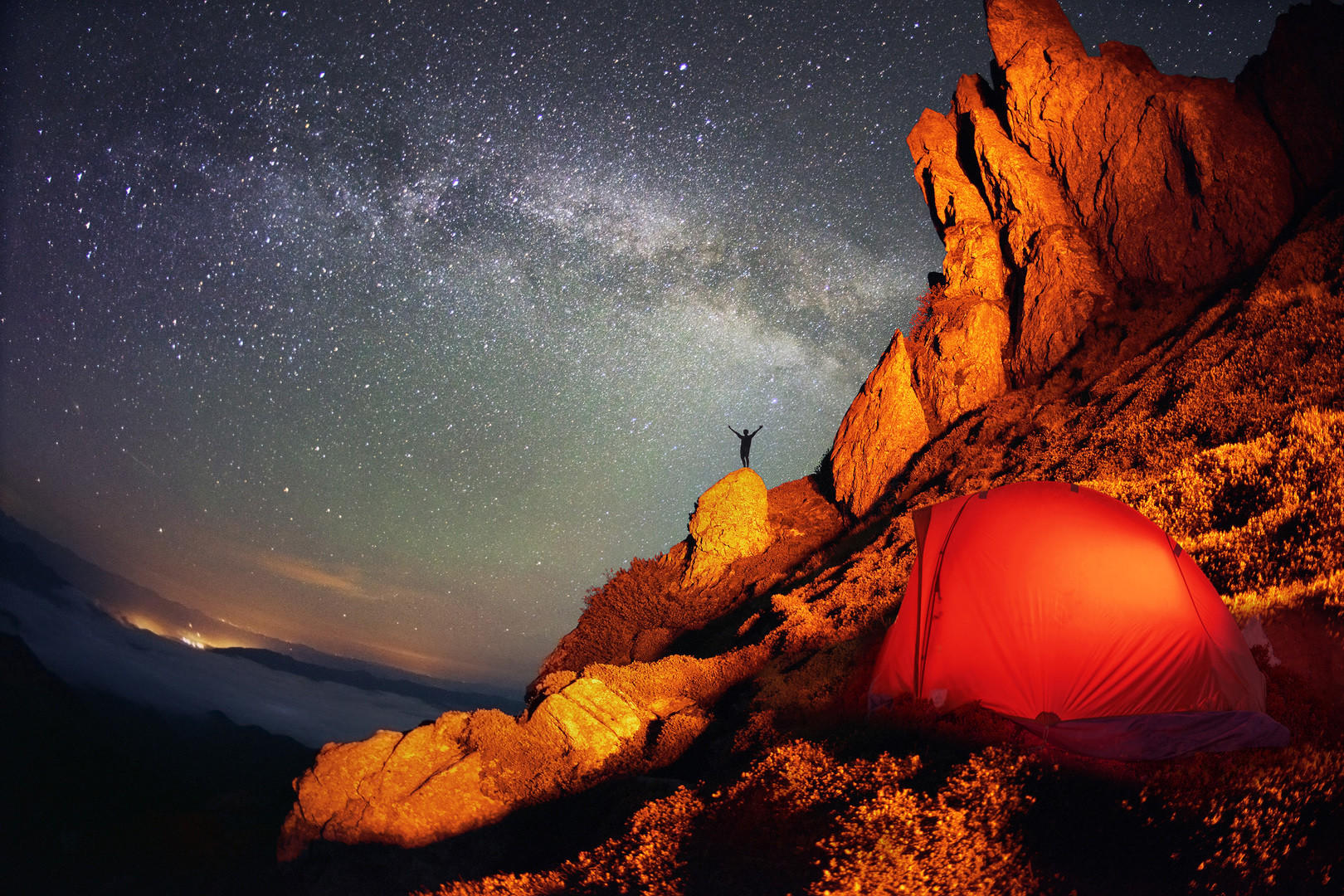
The night desert is a different place entirely. Temperatures drop 15–20°C after sunset. The animals that have been hiding all day come out: kit foxes, javelinas, coyotes, all the reptiles that thermoregulate actively. The sky, absent of light pollution in the deep Sonoran, is extraordinary. The Milky Way is not a concept here — it is a visible structure.
The night asks different things of you: slower movement, a good headlamp with fresh batteries, awareness of your footing on rocky ground you can't fully see. An emergency bivy and a warm layer — even in summer, desert nights at elevation can drop to 10°C — are not items you think about until you need them and then they're everything. Bring them always.
The Second Day: When Complacency Kills You
Every desert accident I have read about or been told about shares one feature: it happened on a day when the person involved thought they knew what they were doing. Not on the first day, when everything is unfamiliar and caution is still active. On the second day, or the fifth, or after a week in the field when the desert feels familiar and manageable. This is when the errors compound.
I made my own version of this mistake on a summer traverse in the Ajo Range, Organ Pipe Cactus National Monument. Day two, morning. I knew the route, had done this section before, felt confident in the water math. What I had not fully accounted for was a temperature spike — overnight lows had stayed unusually warm, meaning my body was already running a sweat deficit before sunrise. By 9 a.m. I had drunk half my day's water. By 11 a.m. I was calculating whether the dry tank marked on the map might actually have water in it after the previous week's rain. It did not. I reached the vehicle four hours later with nothing in my bottles and a bad headache that took the rest of the day to clear.
The lesson is not dramatic. It's practical: recalculate your water budget each morning, not just at the start of the trip. Conditions change. Your body's demands change. The math from day one is not the math for day two in extreme heat.
Reading the Terrain Before You Commit
The Sonoran looks flat from a distance. It is not flat. The terrain is dissected by arroyos — dry washes that cut through the desert floor and are completely invisible until you're standing at the edge. These are not inconveniences; they are significant route-finding obstacles that can add hours to a planned distance. A wash that looks crossable on a topo may require a half-kilometre detour to find a passable bank.
More critically, arroyos that are bone dry can fill in minutes during a monsoon event. Flash floods in the Sonoran travel faster than you can run. If you hear a distant roaring sound and you're in a wash — any sound that suggests water moving at volume — move to high ground immediately without stopping to look for the source. The water will arrive before you see it.
Desert terrain also degrades footwear faster than most hikers expect. The combination of abrasive sand, sharp gravel, and repeated thermal expansion and contraction breaks down boot materials, particularly around the welts and lug edges. Check your soles before a multi-day desert trip and replace anything showing significant delamination. A boot sole that comes off at 15 km from the trailhead is a serious problem.
Emergency Communication and Leave-Behind Plans
Cell coverage in the Sonoran is unreliable across most backcountry areas. The Verizon signal I had for the first three kilometres of my Ajo traverse disappeared completely by the time the route dropped into the first valley. For serious desert travel — anything more than a day hike near a popular trailhead — a satellite communicator is not optional equipment. The ability to send a GPS position and a brief message, or trigger an SOS, is the difference between a serious situation and a fatal one.
Leave a detailed trip plan with a reliable person before every desert trip. This plan should include: your planned route with waypoints, your vehicle location, the date and time you expect to return, and the date and time after which they should contact search and rescue if they haven't heard from you. Make the trigger time specific — not "if you don't hear from me call someone" but "if I haven't called you by 6 p.m. on Saturday, contact Pima County SAR." Vague instructions create hesitation. Specific instructions create action.
What We Carried
- 3L hydration bladder (soft, fits inside pack) plus 1L hard-sided backup bottle
- Electrolyte powder — two servings per person per day minimum in summer heat
- Sun hoody, long-sleeve, UPF 50+ synthetic (not cotton, which retains sweat and increases chafing)
- Wide-brim hat with neck drape — minimum 3-inch brim on all sides
- Lightweight gaiters — keeps sand and debris out of boots, prevents blisters on rough trail
- Emergency bivy (reflective, 150g) — hypothermia risk on desert nights at elevation is real
- Signal mirror plus Fox 40 whistle — both visible/audible at greater distance than voice alone
- Headlamp (primary) plus AAA backup light in hip belt pocket
- Satellite communicator with two-way messaging and SOS capability
- High-SPF zinc-oxide lip balm and sunscreen — reapply every 90 minutes, not just once